
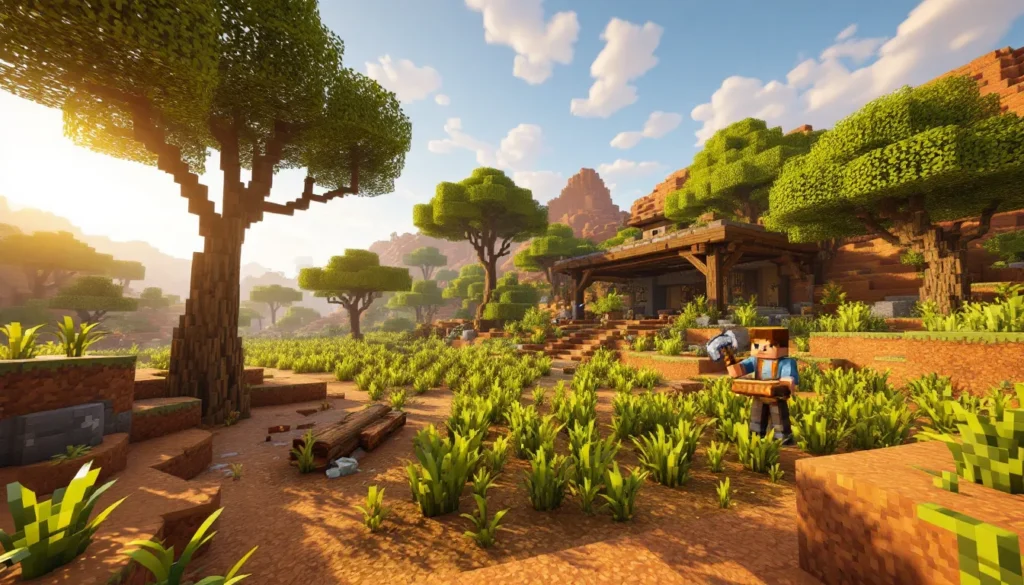
Acacia wood is one of the most underrated building materials in Minecraft, offering a distinctive warm tone that brings life to desert-themed builds and exotic projects. Whether you’re a casual builder experimenting with new aesthetics or someone grinding through a survival world looking to maximize efficiency, acacia wood delivers both functionality and visual appeal. Unlike oak or spruce, acacia has that burnt orange hue that pairs perfectly with terracotta, sand blocks, and other desert biome aesthetics, making it the go-to choice for anyone building structures in hot climates or wanting that rustic, earthy vibe. In this guide, we’ll cover everything from locating acacia trees to setting up an automated farm, plus all the crafting recipes and building strategies you need to work acacia wood into your projects. If you’ve been sleeping on acacia minecraft builds, it’s time to give this wood type the attention it deserves.
Key Takeaways
- Acacia wood in Minecraft offers a distinctive burnt orange hue that excels in desert-themed builds and pairs perfectly with terracotta, sand, and earth-tone materials.
- Acacia trees spawn exclusively in savanna biomes, and optimal farming requires spacing saplings 2 blocks apart with bone meal to maximize growth and logs per harvest cycle.
- Use acacia wood as either a primary material or sharp accent—avoid mixing it evenly with cool-toned woods like spruce or dark oak, which creates visual confusion.
- Acacia stairs and slabs are invaluable for creating textured walls, rooflines, and decorative details, while stripped acacia wood adds visual variety when layered with other blocks.
- Acacia wood is the third most-used wood type among competitive builders because it fills a specific warm aesthetic niche that other wood types cannot replicate.
What Is Acacia Wood in Minecraft?
Acacia wood is a wood variant found exclusively in warm biomes, primarily savannas, with a distinctive tan-to-orange color that sets it apart from other wood types. It was added in the 1.7.2 update and has remained a solid choice for builders ever since. The block combines a warm, weathered aesthetic that reads well from distance, crucial when you’re building large structures and need contrast against green grass or blue water.
The full acacia wood set includes the standard building blocks you’d expect: acacia logs, acacia wood (the stripped variant), acacia planks, acacia leaves, acacia sapling, and various derived items like stairs, slabs, doors, and trapdoors. Each of these serves a specific purpose, and understanding the differences between them is key to efficient farming and crafting.
What makes acacia wood particularly valuable is its color profile. The orange-brown tone works as both a primary and accent material, pair it with dark oak for contrast, or use it alongside stripped acacia for a more refined, modern look. Competitive builders and casual players alike favor acacia for jungle temples, desert bases, African-inspired structures, and even some modern furniture designs. Its uniqueness means you won’t see it everywhere like oak, which gives your builds a more distinctive feel.
Where to Find Acacia Trees
Finding acacia trees requires knowing where to look, because they don’t spawn everywhere. Unlike oak trees that populate most biomes, acacia wood is locked to specific warm regions. Understanding spawn mechanics and biome distribution will save you hours of wandering.
Savanna Biomes
Acacia trees spawn naturally in all savanna biome variants: the standard Savanna, Savanna Plateau, and Windswept Savanna. These are your primary hunting grounds. The savanna is immediately recognizable by its flat terrain, dry grass, scattered acacia trees, and lack of water sources. Trees in savannas tend to be spread out, so you won’t find dense groves like you would in a forest biome, each tree feels isolated on the plains.
The Savanna Plateau variant is slightly more dense in tree placement and includes elevated terrain, making it easier to spot acacia wood from a distance. If you’re playing Java Edition 1.18+, the Windswept Savanna offers similar tree density but with more dramatic altitude changes.
One thing to know: acacia trees in savannas don’t have leaves as dense as oak or birch trees. They typically have thinner canopies and thinner trunks, which means faster harvesting but slightly less wood per tree compared to other species.
Best Farming Locations
For farming efficiency, you’ll want a flat, open area within savanna biome boundaries. The best locations meet three criteria: enough space to build a farm structure, proximity to your base (if you’re already established), and ideally, flat terrain to simplify farm design.
Many players use coordinates around X: 0, Z: 0 relative to their savanna biome center, since savannas often cluster in predictable patterns. If you’re struggling to find a savanna, you can use a biome finder tool or seed analyzer, platforms like Game8 have guides on seed analysis and biome finding that can accelerate your search.
When you’ve located a savanna, mark the best trees with a torch or block to identify the highest-yield specimens. Acacia logs drop from the tree itself, so prioritize natural spawn trees over saplings when possible, since natural trees are always larger than the ones you’ll farm initially.
How to Farm Acacia Wood Efficiently
Farming acacia wood follows the same principles as any other tree farm: plant saplings, grow them, harvest logs, repeat. But, there are optimization strategies that will dramatically speed up your rate of return and reduce tedious manual labor.
Tools You’ll Need
Start with an axe, preferably iron or better for speed. A wooden axe will work in a pinch, but the time difference is noticeable over hundreds of trees. If you’re grinding for large quantities, an enchanted axe with Efficiency V will cut harvest time roughly in half. Unbreaking III extends tool durability, which matters if you’re harvesting thousands of blocks.
You’ll also want a shovel to clear ground space and a water bucket for situational construction. An ender chest is useful if you’re harvesting far from your base, letting you cache materials for later retrieval. If you’re building an automatic farm, pistons, observers, and redstone dust are essential, though that’s beyond basic farming.
Optionally, a hoe speeds up tilling soil if you’re creating a dedicated farm plot, and bone meal accelerates sapling growth, though bone meal is optional and just a convenience factor.
Step-by-Step Farming Guide
Here’s the straightforward method for manual acacia farming:
- Locate or create a flat plot in or near your savanna. A 16×16 area is plenty for a productive farm.
- Plant acacia saplings in rows, spacing them at least 2 blocks apart horizontally. This prevents leaf overlap and maximizes tree size at maturity.
- Wait for growth (or apply bone meal to speed it up). Acacia saplings grow into full trees within a few minutes, or instantly with bone meal.
- Harvest fully-grown trees from bottom to top, collecting logs as they drop. An axe is fastest, but any tool works.
- Replant saplings in the harvested space immediately. This keeps your farm in continuous cycle.
- Convert logs to planks in a crafting table or furnace as needed. Four logs yield twelve planks.
Expect roughly 10-15 logs per tree on average, depending on growth variation. A well-tended farm of 20 trees can supply a builder’s needs for days.
Creating an Automatic Acacia Farm
For larger projects or ongoing survival play, an automatic farm eliminates manual harvesting. The classic design uses observers to detect log breaks, pistons to push logs into a collection system, and redstone to tie it all together. Here’s the concept:
Observer-piston setup: Place observers facing logs so they detect when a log is broken (by you or another player). The observer pulse triggers a piston that pushes adjacent logs into flowing water, which carries them to a collection hopper. You still manually harvest the topmost logs, but the system handles the rest.
For acacia specifically, trees grow with narrower trunks, so you’ll need fewer pistons compared to oak farms, usually one or two per tree depending on width. Space your saplings 8-10 blocks apart to allow room for the piston mechanism without crowding.
A more advanced approach uses tree farms with 3-wide spacing, which encourages taller trees and larger overall logs-per-growth. The tradeoff is you’ll need more pistons, but yields improve significantly. The redstone complexity is straightforward, even mid-game players handle it without issues.
If redstone feels intimidating, you can skip automation entirely and just manually harvest every few days. The time investment for manual farming is roughly 2-3 minutes per harvest cycle for a 20-tree farm, which is acceptable for many playstyles.
Acacia Wood Crafting Recipes and Uses
Once you’ve harvested acacia logs, the crafting possibilities expand quickly. Acacia wood’s primary recipes are straightforward, but understanding how to convert logs into finished products is essential for efficient resource management.
Essential Crafting Recipes
The fundamental conversion chain for acacia wood is:
- 4 acacia logs → 12 acacia planks (crafting table or inventory)
- Acacia planks → stairs, slabs, doors, trapdoors (1 plank = 1 stair, 2 planks = 2 slabs, 6 planks = 1 door, 6 planks = 2 trapdoors)
- Acacia logs → acacia wood (stripped variant) (use an axe on logs)
Stripped acacia wood is visually distinct, it has a lighter, more uniform orange tone without the bark texture. Both logs and stripped wood serve building purposes, so having both variants gives you more design flexibility.
For decorative purposes, acacia planks and stairs are your bread-and-butter blocks. Stairs are invaluable for rooflines, interior detailing, and adding depth to flat surfaces. Slabs allow half-block precision, letting you create detailed trim and layered designs. Doors and trapdoors are functional, but acacia’s warm tone makes them visually appealing as well, much more interesting than standard oak doors.
You can also craft acacia fence and fence gates (6 planks = 3 fences, 4 planks + 2 sticks = 1 gate). Fences are underrated for framing gardens or defining spaces, and acacia’s color makes them pop against green grass.
Decorative Items and Furniture
Beyond the basic blocks, acacia wood shines in decorative applications. Combining acacia planks with other materials creates visual interest:
- Acacia furniture: Use stairs and slabs to craft chairs, benches, and tables. Place stairs sideways and add slabs to create a chair, or arrange slabs into a table surface. Builders often pair acacia with cushion-colored wool or carpet for comfort.
- Rooflines and awnings: Acacia stairs create excellent pitched roofs. The warm tone contrasts nicely with darker materials like blackstone or deepslate, or complements lighter materials like sand and birch.
- Shelving and bookcases: Acacia slabs stacked vertically with carpets or trap doors create shelving. Pair with dark oak or mangrove for visual separation.
- Decorative walls: Mix acacia planks with stripped acacia wood in alternating patterns for textured walls. Add acacia trapdoors as window shutters, they open/close smoothly and look authentic.
The key to using acacia decoratively is recognizing its warm undertone works best with earth tones (terracotta, sand, clay, stone) and contrasts sharply with cool tones (spruce, dark oak, blackstone). Use that contrast intentionally, pair acacia with dark materials for pop, or go all-warm with sandy, rustic builds.
Building with Acacia Wood
Acacia wood’s aesthetic power comes from understanding how to leverage its color and texture in designs. This section breaks down practical building techniques that work across any project scale.
Aesthetic Building Tips
Warm wood like acacia works best when it’s either the primary material or a sharp accent. Avoid mixing it evenly with cool woods, the result feels muddy. Instead, commit to one direction: go full warm tones (acacia, oak, dark oak, mangrove), or use acacia as the featured accent against cooler materials.
Acacia’s thinner texture compared to dark oak makes it feel lighter and more open. This is useful for buildings that need visual airiness, think tropical structures, safari lodges, or modern homes. Use acacia planks and stairs for walls and roofing, keeping beams dark (dark oak, blackstone) for weight and stability in the design. The contrast creates visual hierarchy without overwhelming the structure.
Texturing is crucial. Flat acacia walls feel dull. Break them up with:
- Stripped acacia wood (lighter variant) as horizontal bands or vertical pillars
- Acacia trapdoors as window shutters or wall details
- Acacia stairs tilted horizontally for siding texture
- Dark wood beams (dark oak or mangrove) for structural framing
Layering these elements creates depth and interest. A wall of pure acacia planks reads as flat, but a wall with stripped acacia bands and dark oak posts suddenly has visual structure.
Color Matching and Design Ideas
Acacia’s burnt orange tone sits in a specific color space. Understanding what pairs well with it saves enormous amounts of time during building:
Excellent pairings:
- Terracotta blocks (especially orange, brown, and yellow variants) echo acacia’s warmth
- Sand and sandstone create a cohesive desert aesthetic
- Dark oak or mangrove for framing and contrast
- Blackstone or deepslate for sharp modern contrast
- Diorite or light stone for neutral, clean builds
Avoid:
- Spruce or dark oak as the primary material alongside acacia, the color clash is visual noise
- Bright greens and blues unless you’re intentionally going for high-contrast, stylized builds
- Excessive mixing of warm woods, two warm tones (acacia + dark oak) is enough: more than that feels chaotic
For desert-themed builds, acacia is mandatory. Pair it with sand blocks, sandstone stairs, dried kelp for texture, and terracotta for walls. A simple recipe: acacia roof, terracotta walls, dark oak trim, sand foundation. That’s a cohesive desert house.
For jungle temples and exploration posts, acacia works as secondary framing around stone brick or deepslate. The warm tones suggest age and weathering, fitting for ancient structures.
For modern homes, acacia surprises people, its clean lines work with minimal stone (diorite or concrete) and dark accents. Think Japanese-inspired minimalism but warmer.
Popular Acacia Wood Builds
Some builds showcase acacia wood exceptionally well. If you’re looking for inspiration, consider:
Safari lodge: Acacia primary material, dark oak beams, thatch roof (using stairs), open-air design with fence railings. Popular in hardcore worlds because it’s defensible while looking great.
Desert pyramid complex: Layered acacia and sandstone, featuring acacia stairs as sand-swept architectural details and dark oak as the ceremonial interior pillars. The warm tones suggest buried ruins.
Marketplace or shop stalls: Individual vendor stalls using acacia wood, trapdoors, and signs. The material naturally suggests rustic merchant architecture.
If you want detailed step-by-step instructions for any specific build, resources like Twinfinite provide extensive walkthroughs and build guides that complement acacia wood projects. Searching for “acacia tree minecraft” or “acacia minecraft” builds on those platforms yields dozens of examples you can adapt to your world.
Comparing Acacia Wood to Other Wood Types
Minecraft offers seven primary wood types (oak, spruce, birch, jungle, acacia, dark oak, and mangrove as of 1.19+). Understanding how acacia stacks up helps you choose the right material for each project.
Oak is the baseline, common, versatile, neutral color. Acacia is warmer and more distinctive, making it better for projects where you want visual character but worse for generic utility builds.
Spruce skews cool and dark. Acacia is the opposite: warm and bright. Mixing them creates visual tension: use separately.
Birch is pale and crisp. Acacia’s warmth contrasts sharply with birch’s coolness, but the contrast can work if intentional. Pairing acacia beams with birch planks creates a distinct aesthetic.
Jungle wood is similarly warm to acacia but darker. Acacia is lighter and more orange: jungle wood is deeper brown. Both work in tropical builds but have different feels.
Dark oak is the closest competitor to acacia thematically. It’s also a statement wood type with distinctive color. Dark oak is cooler and heavier: acacia is warmer and lighter. Use dark oak for framing and structure, acacia for visible surfaces.
Mangrove (newer) is also warm-toned like acacia. Mangrove trends slightly more reddish: acacia trends more orange. Both work together, but they’re competing for the same visual space.
If you want a single go-to wood type that works everywhere, oak is still that choice, it’s genuinely versatile. But if you’re building something specific and warm-toned, acacia punches above its weight. It’s the third most-used wood type among competitive builders after dark oak and spruce, precisely because it fills a specific aesthetic niche that other woods can’t.
Performance and Efficiency Tips
Farming and using acacia wood efficiently involves both mechanical optimization and resource management. These tips apply whether you’re a casual builder or someone grinding out large survival projects.
Maximizing Your Harvest
A few mechanical adjustments significantly improve yield:
Sapling spacing: Space saplings exactly 2 blocks apart. This prevents leaves from overlapping, allowing trees to reach maximum height. Cramped spacing produces shorter, scrawnier trees with fewer logs.
Bone meal application: Bone meal skips the wait time entirely. One bone meal grows a sapling to full maturity instantly. If you have a skeleton grinder or can acquire bone meal from fishing, apply it liberally, the time savings compound across hundreds of trees.
Harvest timing: Fully-mature acacia trees are obvious, they’re tall with full canopies. Don’t harvest partially-grown trees. Wait until they’re complete, then harvest everything. Partial harvesting wastes growth cycles.
Log conversion efficiency: Always convert logs to planks immediately or store logs in chests. Planks take less inventory space and are closer to finished products. One stack of logs (64 blocks) converts to 192 planks, which is a 3x compression ratio. This matters if you’re transporting to your build site.
For automatic farms, use hoppers and chests to funnel drops. A simple system of hoppers feeding a double chest captures everything without you jumping in water streams. This is especially useful for large farms producing hundreds of logs daily.
Storage and Organization
Acacia wood produces many derivatives, planks, stairs, slabs, doors, etc. Organization matters for efficiency:
Dedicated storage room: Designate a room with labeled chests, one for logs, one for planks, one for stairs, one for slabs. Sorting immediately saves hunting time during builds. Use item frames or signs to label each chest.
Relevant storage near builds: If you’re actively building, keep a secondary storage of pre-crafted acacia stairs and slabs near the build site. This eliminates travel time to your main base.
Batch crafting: When your acacia log chest is full, batch-convert to planks (craft multiple stacks at once). This is faster than converting as you need them during builds.
Overflow management: Acacia farms produce surplus. Don’t let it pile up in one chest, use extras for:
- Trading with villagers (librarians, shepherds)
- Fuel for furnaces (though wood isn’t optimal fuel, coal and charcoal are better)
- Creating decorative structures or secondary bases
- Selling to other players if you’re on a multiplayer server
A well-organized storage system takes 10 minutes to set up but saves hours over a long survival playthrough. The internal link about how to make doors covers advanced crafting organization strategies that apply to any wood type, including acacia.
For large-scale projects, experienced players often pre-harvest and pre-craft weeks in advance. If you know you’re building a 50-block-long acacia building, calculate the exact number of stairs/slabs needed, farm that quantity beforehand, and then focus purely on building. This workflow is 10x faster than farming on-demand during construction.
Finally, use Nexus Mods to explore quality-of-life mods if you’re on Java Edition, mods like “Better Hoppers” or inventory management tools can further streamline your harvesting and crafting workflow. Mods aren’t necessary for survival, but they’re valuable for players who farm obsessively.
Conclusion
Acacia wood deserves a place in every builder’s toolkit. It’s warm, distinctive, and surprisingly versatile, from desert biome structures to modern minimalist homes. Whether you’re farming it manually in a casual world or automating production for a massive project, the strategies outlined here apply across all survival difficulties and playstyles.
Start with a simple 20-sapling farm in a savanna biome. Harvest methodically, convert logs to planks, and experiment with acacia in a small build first. Once you understand how its warm tone pairs with other materials, you’ll naturally gravitate toward using it more often. Competitive builders favor it precisely because it’s distinct enough to make bases stand out but warm enough to feel welcoming, a rare combination in Minecraft’s building palette.
The farming techniques scale smoothly from casual to hardcore, and the aesthetic applications work whether you’re building a 5-block hut or a 200-block mega-build. Acacia wood in Minecraft is proof that sometimes the best materials aren’t the most obvious ones, they’re the ones you intentionally choose because they fit the vision.
More Stories
Minecraft Slope Unblocked: The Complete Guide to Playing Anywhere in 2026
How to Build Epic Minecraft Skyscrapers: Design, Tips, and Techniques for 2026
How To Build An Epic Spruce House In Minecraft: The Complete 2026 Design Guide