
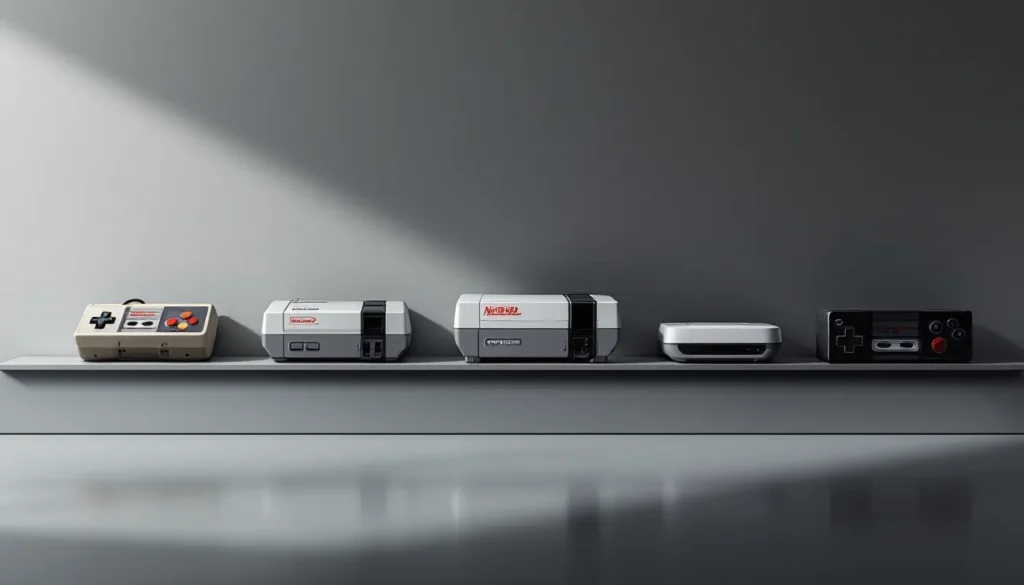
Nintendo’s journey from a playing card manufacturer to the world’s most influential gaming company spans over four decades of innovation, missteps, and iconic hardware that shaped how we play. The nintendo console timeline isn’t just a collection of release dates, it’s a narrative of risk-taking, creativity, and an unwavering commitment to gameplay over raw horsepower. From the beige box that saved the video game industry in 1983 to the hybrid sensation of the Switch era, every nintendo console represents a turning point in how gamers interact with entertainment. This timeline tracks the evolution of every major Nintendo console and handheld system, showing how the company consistently reinvented itself when competitors thought they had it figured out. Whether you’re curious about the blocky pixels of the NES, the leap to 16-bit graphics, motion controls, or the groundbreaking portability of modern systems, understanding this console history explains why Nintendo remains the only company that’s stayed relevant across eight generations of gaming hardware.
Key Takeaways
- The nintendo console timeline demonstrates that innovation in gameplay and user experience consistently outperforms raw processing power, from the NES saving the industry in 1983 to the Switch’s 139 million-unit success.
- Nintendo’s hybrid design philosophy—prioritizing unique interaction methods like motion controls, touchscreens, and portable-plus-docked capability—has defined market leadership across eight console generations.
- The Game Boy’s battery life and durability, the DS’s dual screens, the Wii’s motion controls, and the Switch’s portability prove that gameplay accessibility matters more to mainstream consumers than hardware specifications.
- Nintendo’s willingness to accept hardware limitations in exchange for distinct design possibilities has enabled the company to remain relevant while competitors focused on matching PlayStation and Xbox processing power.
- The Switch 2’s confirmed backwards compatibility and maintained hybrid design reflect Nintendo’s established strategy of respecting player investment while iterating on successful form factors rather than abandoning proven concepts.
- Software quality remains Nintendo’s competitive advantage, with iconic franchises like Super Mario, The Legend of Zelda, and Pokémon justifying hardware purchases across generations when competitors couldn’t replicate exclusive experiences.
The Beginning: The Nintendo Entertainment System Era (1983–1995)
NES: Revolutionizing Home Gaming
When Nintendo released the Famicom (Family Computer) in Japan on July 15, 1983, the home video game market was in freefall. The 1983 crash had killed consumer confidence in console gaming entirely. Atari’s glut of poor games, unreliable hardware, and market saturation meant most retailers had stopped stocking video games altogether. Nintendo didn’t just enter this graveyard, it resurrected it.
The Famicom arrived with iconic launch titles like Donkey Kong, Mahjong, and Baseball. Its cartridge-based design, superior processor, and Nintendo‘s strict quality control flipped the narrative. By pairing the console with Super Mario Bros. in 1985 (as the Nintendo Entertainment System in North America), Nintendo didn’t just sell hardware, they saved the entire industry. The NES became cultural shorthand for gaming itself. That gray plastic box with the front-loading cartridge slot and the iconic red/black controller designs went on to shift over 61 million units worldwide across its various iterations and rereleases.
The NES library grew to over 700 officially licensed games. Classics like The Legend of Zelda, Metroid, Castlevania, Contra, and Mike Tyson’s Punch-Out.. weren’t just good games, they defined what console gaming could be. The Game Boy port of Tetris proved the company understood both hardware architecture and software pairing at a level competitors simply couldn’t match. Every decision, from controller design to the cartridge connector specs, felt deliberate. The 10-NES lock (the chip that prevented unlicensed cartridges from functioning) was controversial at the time but essentially became the template for how consoles manage their ecosystems today.
Game Boy and Handheld Dominance
While the NES dominated living rooms, Nintendo’s Game Boy launched in April 1989 and immediately shifted how people thought about portable gaming. The system wasn’t cutting-edge. The Atari Lynx and Sega Game Gear had color screens, more processing power, and flashier visuals. But the Game Boy had something better: Tetris bundled in, 15+ hours of battery life, and an indestructible design. Gamers could take their library anywhere, and the monochrome screen actually made the sprites clearer than color competitors’ washed-out displays.
The handheld market became Nintendo’s second fortress. The original Game Boy sold 18.69 million units. The Game Boy Pocket (1996) refined the design with a sharper screen and pocket-friendly size. The Game Boy Color (1998) finally added color capability while maintaining backwards compatibility with the entire Game Boy library. This strategy, respecting player investment while offering incremental improvements, would become Nintendo’s playbook across every generation.
By the late 1980s and early 1990s, Nintendo controlled both the living room and the schoolyard. Kids played Super Mario Bros. at home and Pokémon Red/Blue on their Game Boy during lunch. The company had created a monopoly not through aggressive licensing deals but through consistent, thoughtful hardware design and software partnerships that felt inevitable. This early era established the template: hardware that worked reliably, software that justified the purchase, and iterative improvements that rewarded early adopters while remaining accessible to newcomers.
The 16-Bit Shift: Super Nintendo and Beyond (1990–2003)
Super Famicom and SNES: Pushing Graphical Boundaries
The transition from 8-bit to 16-bit gaming could have gone differently. Sega’s Genesis arrived in North America in 1988, two years before the SNES. But Nintendo’s Super Famicom (released in Japan in November 1990) was a masterpiece of engineering restraint. While the Genesis emphasized speed and arcade conversions, the SNES featured more advanced color palettes (256 colors vs. the Genesis’s 61), a more powerful graphics processor, and Mode 7 scaling effects that made Mode 7 games like F-Zero and Star Fox look otherworldly to players weaned on flat 2D sprites.
The North American Super Nintendo Entertainment System launched in 1991 with Super Mario World, arguably the best launch title in console history. The game showcased exactly what 16-bit hardware could achieve: fluid animation, complex level design, and visual clarity that made the Genesis’s blast-processing look crude by comparison. The SNES library became a masterclass in genre diversity: The Legend of Zelda: A Link to the Past, Super Metroid, Chrono Trigger, Final Fantasy VI, Donkey Kong Country (revolutionary for its pre-rendered 3D backgrounds), and Street Fighter II, which, even though the Genesis versions, felt most at home on Nintendo’s hardware.
The SNES eventually outsold the Genesis 46.3 million to 29 million units. The console’s library remains the gold standard for 2D game design. The controller’s ergonomic grip, the shoulder buttons that became standard, and the cartridge design all influenced every console manufacturer afterward. Nintendo’s decision to stick with cartridges (while Sega moved to cartridges, then CDs) meant load times were instant, but it also limited the SNES’s visual capabilities compared to competitors. This trade-off, immediate gameplay over raw storage, remained a recurring theme in Nintendo’s philosophy.
Virtual Boy: A Brief Experiment in 3D
Not every Nintendo console succeeded, and the Virtual Boy (1995) remains the company’s most notorious hardware failure. Released in North America with red-and-black monochrome visuals, the handheld system was designed to deliver 3D gaming through stereoscopic displays, a genuinely novel concept for 1995. Players fitted the headset, stared into two small red LED screens, and experienced a sense of depth that was, for the moment, legitimately impressive.
The problem? The Virtual Boy caused headaches, eyestrain, and nausea in many users. It retailed for $180, was uncomfortable to use for extended sessions, and suffered from an anemic library. Only 22 games were officially released before Nintendo discontinued it after less than a year in the North American market. The Virtual Boy shifted around 770,000 units, a rounding error compared to the SNES’s 46 million. But the Virtual Boy mattered for one crucial reason: Nintendo proved it was willing to take technological risks, even when those risks failed spectacularly. The company didn’t hide from the Virtual Boy: it learned from it and moved forward.
The Cartridge Wars End: Nintendo 64 and GameCube
The Nintendo 64 (1996) arrived as the Sega Saturn and Sony PlayStation already dominated the 3D graphics race. While those consoles embraced CDs and polygon-driven games, the N64 stuck with cartridges but made a bold leap: full 64-bit 3D graphics. The console’s most distinctive feature was its three-pronged controller with an analog stick, a radical departure from the SNES’s design but instantly imitated by every competitor afterward.
Super Mario 64 launched alongside the N64 in North America and redefined 3D platforming overnight. The game’s camera control, movement options, and spatial design felt revolutionary. The N64’s aggressive anti-aliasing gave it a softer, more stylized look than the PlayStation’s jagged polygons, a difference that, in retrospect, has aged beautifully in the N64’s favor. The library included The Legend of Zelda: Ocarina of Time, GoldenEye 007, Perfect Dark, Mario Kart 64, and Super Smash Bros., a fighting game that seemed niche until it fundamentally altered competitive gaming’s future.
The N64 sold 32.93 million units, respectable but trailing the PlayStation’s 102 million. Nintendo had lost the “raw power” argument to Sony, but it had won something more durable: a library of games that defined a generation. The cartridge format limited game size and made FMV sequences expensive, pushing developers toward gameplay-first design. In hindsight, that limitation was a strength.
The GameCube (2001) was Nintendo’s final cartridge console and marked a transition to optical media (mini-discs instead of DVDs, a cost-cutting measure that also meant backwards compatibility breakage from the N64). The purple box with the compact disc slot looked nothing like the competition, and that was intentional. While the PlayStation 2 and Xbox chased Hollywood cinematic presentation, the GameCube delivered vivid, saturated colors and stylized visuals. The Legend of Zelda: The Wind Waker, Metroid Prime, Super Smash Bros. Melee, and F-Zero GX proved the GameCube’s visual style was a feature, not a limitation.
The GameCube sold 21.74 million units, the lowest-selling Nintendo home console at that point. The mini-disc format was a strategic error (it couldn’t compete with DVD players), but the GameCube’s library remains exceptional. The console proved Nintendo could iterate its design philosophy and stay relevant without matching competitor hardware specs.
The Disc and Handheld Revolution (2001–2012)
GameCube: The Purple Console That Stayed True to Form
The GameCube’s story spans two eras, but its cultural moment was unique. Arriving in 2001, the system represented Nintendo’s first real departure from the boxy, gray aesthetic that had defined the NES and SNES. The purple, lunch-box shaped console with its handle made a bold statement: gaming hardware could be colorful and unconventional.
Technically, the GameCube featured a 485 MHz processor and 24 MB of RAM, competitive with the PlayStation 2 for the era but trailing the Original Xbox. What mattered more was how developers used the hardware. Resident Evil arrived as a GameCube exclusive and proved the system could deliver horror gaming. Eternal Darkness, another exclusive, showcased original design ideas that wouldn’t have felt at home on competitor platforms. The console’s backwards compatibility with certain Game Boy Advance titles through a special cable was a nice touch, though rarely utilized.
By 2003-2004, the PlayStation 2’s dominance was undeniable, the system boasted DVD playback (a major selling point as DVD adoption accelerated) and a vastly larger third-party library. The GameCube’s mini-disc format and lack of DVD capability were strategic losses. Nintendo was learning a painful lesson: hardware specifications and media format adoption mattered outside of pure gaming. But the GameCube’s first-party titles remained exceptional, and the competitive community would eventually rally around Super Smash Bros. Melee, a fighting game so balanced and fun that it remains a staple of esports tournaments over two decades later.
Game Boy Advance: Handheld 32-Bit Gaming
While the GameCube struggled in homes, the Game Boy Advance (2001) became Nintendo’s handheld juggernaut. The GBA represented a massive leap from the monochrome Game Boy, full color, 32-bit processing (matching the original PlayStation’s horsepower), and a library of games that proved handheld gaming wasn’t a compromise, it was a different experience entirely.
The GBA’s form factor was wide and uncomfortable for some players, and the screen required a light source to see clearly (the original model lacked a backlight). But the library made those concerns secondary. Pokémon Ruby and Sapphire, The Legend of Zelda: The Minish Cap, Fire Emblem, Mega Man Battle Network, Advance Wars, and Mario & Luigi: Superstar Saga showed that handheld development wasn’t about downgrading console games, it was about designing for the format’s unique constraints. Developers crafted turn-based gameplay, smaller levels, and pick-up-and-play structures that made the GBA feel like a destination for gaming, not a travel-size alternative.
Nintendo released the GBA SP in 2003 with a clamshell design, built-in backlight, and rechargeable battery. The design innovation was crucial, suddenly, the GBA was no longer a handheld that required squinting or carrying a light accessory. The GBA Micro (2005) pushed minimalism further, resulting in a system so small it felt portable in ways even the original Game Boy couldn’t match. The Game Boy Micro’s library was identical to the GBA’s, but the form factor appealed to collectors and portability enthusiasts.
The Game Boy Advance sold 81.51 million units across its iterations, more than the GameCube and rivaling the N64. For the first time in gaming history, the handheld console outsold the home console from the same manufacturer. Nintendo had discovered that gameplay and thoughtful design mattered more than raw power, regardless of whether players were sitting on a couch or riding the bus.
Nintendo DS: The Dual-Screen Game Changer
The Nintendo DS (2004) might be Nintendo’s most audacious hardware decision ever. While the PSP aimed to deliver console-quality graphics in a portable package, the DS split its screen in half, added a touch screen, and bundled a stylus. Competitors mocked it. The DS looked like a calculator. The specs were objectively weaker than the PSP’s. But Nintendo understood something about game design that competitors missed: input methods and screen real estate created new design opportunities.
Touch. Generations titles like Nintendogs and Brain Age proved the touch screen wasn’t a gimmick, it was a revolution in control design. The Legend of Zelda: Phantom Hourglass used stylus control to redefine dungeon navigation. The dual screens meant developers could display inventory, maps, or additional information without cluttering the main action. Pokémon Mystery Dungeon: Red Rescue Team used the bottom screen for menu navigation while the top screen handled gameplay. The form factor inspired entire genres.
The DS became a phenomenon with non-gamers. Brain Age sold 35 million copies. Pokémon Diamond/Pearl and Pokémon Mystery Dungeon franchises exploded. Mario Kart DS became the best-selling Mario Kart game ever at that point (94.21 million units). The Nintendo DS sold 154.02 million units, making it one of the best-selling gaming devices in history. It outsold the PlayStation 2, the Xbox, and the GameCube combined. For nearly a decade, the DS was handheld gaming.
The DSi (2008) added a camera, downloadable titles through DSiWare, and slightly improved processing power. The DSi XL (2009) enlarged the screens for players with vision challenges. Every iteration respected backwards compatibility while adding incremental improvements, the same strategy that defined the Game Boy line’s success. By 2012, when the 3DS arrived, the DS had proven that Nintendo’s emphasis on gameplay innovation over raw specs wasn’t a weakness, it was the future of gaming.
Motion Controls and HD Gaming (2006–2017)
Wii: Motion Gaming Goes Mainstream
The Wii (2006) did what the Virtual Boy attempted and failed: it made motion controls intuitive and fun. With the Wiimote’s accelerometer, players could swing a tennis racket, cast a fishing line, or aim a gun by actually moving the controller. It sounds simple, but motion controls were the industry’s white whale, everyone wanted it to work, but Nintendo was the first to make it actually work.
The Wii’s hardware was technically the weakest console on the market. The CPU ran at 729 MHz, the GPU handled 1080i resolution maximum (though most games rendered at 480p), and internally it was weaker than the GameCube released five years earlier. But the Wii didn’t need raw processing power, it needed accessibility, and it delivered that in spades. Wii Sports launched as a pack-in title, and suddenly grandparents were playing bowling, families were competing in tennis, and the living room became a game space instead of a spectator area.
The library was fascinating: Wii Fit pioneered motion-controlled exercise: The Legend of Zelda: Twilight Princess (and later Skyward Sword) redesigned combat around motion controls: Super Mario Galaxy used motion for platforming mechanics: Donkey Kong Country Returns brought back the dormant platformer franchise. Third-party developers flooded the platform with motion-controlled mini-game collections of wildly varying quality, a problem the Wii couldn’t avoid given its open ecosystem. But the signal-to-noise ratio was high enough that the Wii became undeniable.
The Wii sold 101.63 million units. It outsold the PlayStation 3 (87.4 million) and the Xbox 360 (85 million) even though having significantly weaker hardware. The Wii proved that innovation in control and interface mattered more to the mainstream than processing power. Motion controls became briefly fashionable across the industry (the PlayStation Move, the Xbox Kinect), but none matched the Wii’s cultural penetration.
The Wii Mini (2012) stripped out motion sensing refinement and motion-plus technology, essentially offering a budget Wii. By that point, the original Wii’s library was so established that the Mini felt like a cost-cutting measure rather than an innovation, which is exactly what it was.
3DS: Autostereoscopic Handheld Gaming
The Nintendo 3DS (2011) took Nintendo’s philosophy of unique input methods and applied it to handheld gaming with a glasses-free 3D display. Using parallax barriers (a technology that wasn’t new but was new to consumer handhelds), the 3DS rendered stereoscopic depth without requiring special eyewear. The effect was striking, games looked genuinely three-dimensional when viewed from the correct angle.
Here’s where the 3DS’s story gets complicated: the autostereoscopic 3D effect worked best when viewed straight-on and was affected by head position. Many players (particularly younger children and those with vision issues) reported headaches. A 2DS version launched in 2013 without the 3D screen, which contradicted the entire design philosophy but also acknowledged that the 3D feature wasn’t essential to the experience. Some players loved the 3D: others immediately disabled it. Nintendo didn’t force the technology, it remained optional.
The 3DS’s software library became excellent. The Legend of Zelda: Ocarina of Time received a remaster that showcased 3D depth beautifully. Pokémon X/Y delivered the series’s first full 3D mainline games. Fire Emblem Awakening and Fire Emblem Fates proved handheld strategy gaming could be complex and engaging. Kid Icarus: Uprising, Luigi’s Mansion: Dark Moon, and New Super Mario Bros. 2 showed the 3DS could deliver experiences as rich as home consoles. The system sold 75.48 million units, trailing the DS but still dominant in the handheld market.
The New 3DS (2014) improved processing power, added a second analog stick, and used better 3D tracking. The new model felt like a genuine hardware revision rather than an incremental iteration, it fixed the 3DS’s main performance bottleneck. By 2017, when the 3DS line was winding down, it had become Nintendo’s second-best-selling platform ever. Nintendo proved that Nintendo was willing to sunset hardware when the next generation arrived, accepting that older players would lose digital library access, a decision that sparked legitimate criticism about digital ownership.
Wii U: A Divisive Console with Unique Innovation
The Wii U (2012) represented Nintendo’s most significant hardware misstep since the Virtual Boy. The console featured an 8-inch touchscreen built into the GamePad controller, offering asymmetrical gameplay where the TV and the GamePad displayed different content. It was innovative, but it was also confusing.
The GamePad’s tablet-like screen was a genuinely interesting design, developers experimented with creative asymmetrical gameplay. ZombiU forced players to manage inventory on the GamePad while watching the TV for threats. Nintendo Land turned the GamePad into a treasure-hunting device while the TV showed a different player’s perspective. Splatoon later proved the Wii U could host online competitive games (though not initially). But casual buyers didn’t understand the Wii U. Was it an accessory for the original Wii? A new console? The marketing was catastrophically unclear.
The hardware itself was weaker than the PlayStation 4 and Xbox One, which launched simultaneously. The name was confusing. The GamePad drained battery life. The online infrastructure was worse than competitors’. Publishers largely avoided the Wii U. The console sold only 13.56 million units, Nintendo’s second-lowest-selling home console after the GameCube.
But the Wii U’s library had hidden gems. Splatoon launched on the Wii U and became a surprise esports hit (eventually dominating the Switch). Bayonetta 2 was a Wii U exclusive directed by Platinum Games. The Legend of Zelda: Breath of the Wild was originally built for Wii U but launched on the Switch instead, essentially rendering the Wii U version irrelevant. By the time the Switch arrived in 2017, the Wii U had become a footnote. Players who suffered through the Wii U’s rough launch and confused branding felt vindicated when Nintendo essentially abandoned the platform in favor of the hybrid successor.
The Hybrid Era and Beyond (2015–2026)
Nintendo Switch: The Console That Changed Everything
The Nintendo Switch (March 2017) arrived as the gaming industry’s most significant hardware revelation in a generation. A console that worked as a home system, a portable handheld, or a tabletop device using detachable Joy-Con controllers, the Switch’s core appeal was flexibility. Players could dock it for TV gaming, pull out the Joy-Cons for portable play, or prop it up with the stand for handheld tabletop mode. It sounds obvious in retrospect, but no one had done this before, and it worked because Nintendo designed every aspect of the experience around this hybrid concept.
The Legend of Zelda: Breath of the Wild launched alongside the Switch and redefined open-world game design. The game wasn’t exclusive to the Switch (it also launched on Wii U), but it was designed first for the Switch’s portable nature. Dungeons could be tackled in any order. Exploration was nonlinear. The game respected player agency in ways open-world predecessors didn’t. Breath of the Wild sold over 31 million copies, making it the best-selling Zelda game ever.
The Switch’s first year library was exceptional: Mario Kart 8 Deluxe (the Wii U port upgraded), ARMS, Splatoon 2, Super Mario Odyssey, and The Legend of Zelda: Breath of the Wild. Nintendo proved the hybrid form factor wasn’t a compromise, it was liberation. Players could continue their game on the TV, pause mid-game, undock the console, and keep playing in portable mode without loading screens. The Joy-Cons’ motion controls (refined from the Wii era) worked better than ever. The built-in kickstand enabled tabletop gaming for playing with friends without a TV.
Switching to a hybrid architecture meant accepting lower raw processing power compared to the PS4/PS4 Pro and Xbox One/Xbox One X. Third-party developers had to downgrade games or make optimization decisions. Ports like Doom (2016), The Witcher 3, and Fortnite required visual compromises, reduced resolution, lower frame rates, simplified draw distances. But the trade-off was worth it for many players. Gaming on the go with console-quality titles was a revolution.
The Switch became a cultural phenomenon. It sold over 139 million units in its first eight years, making it one of the best-selling consoles ever. Competitors tried to compete with handheld gaming (Steam Deck, ROG Ally), but by 2024, the Switch had so thoroughly dominated the hybrid market that alternatives felt niche. The Switch had unified Nintendo’s home and handheld audiences, solving a fragmentation problem that had existed since the NES era. The Switch’s library grew to over 10,000 titles, ranging from indie gems to AAA ports. The eShop’s curation challenges (thousands of low-quality games cluttering the storefront) were offset by the sheer volume of quality content available.
Switch Iterations and Enhancements
Nintendo released multiple Switch revisions between 2017 and 2026. The Switch Lite (October 2019) was a portable-only handheld without dockable capability or detachable Joy-Cons, retailing for $199. It was designed for players who wanted the Switch experience without the hybrid features, essentially a modern Game Boy Advance. The Switch Lite sold over 19 million units to players who preferred portability over flexibility.
The Switch OLED model (October 2021) featured a larger OLED screen with superior color accuracy and contrast, improved audio, and increased internal storage. The OLED screen made portable gaming significantly more enjoyable, but the model retained the same processing power as the original. For docked play, there was no visible difference. For handheld players, the OLED upgrade justified the $349 price tag. The Switch OLED proved Nintendo understood that hardware revisions didn’t require processing upgrades, screen quality, aesthetics, and ergonomics mattered as much as raw performance.
Between 2018 and 2024, the Switch library grew into one of the strongest in gaming. Super Smash Bros. Ultimate became the best-selling fighting game ever with over 42 million copies sold. Animal Crossing: New Horizons launched during the COVID-19 pandemic and became a cultural phenomenon, selling over 44 million copies. Super Mario Odyssey, Mario Kart 8 Deluxe, Splatoon 3, The Legend of Zelda: Tears of the Kingdom, and Pokémon Scarlet/Violet formed a core library that justified the hardware.
A-tier third-party titles found homes on the Switch: Doom, Fortnite, The Witcher 3, Dark Souls, Final Fantasy X, and Kingdom Hearts 3. Indie games thrived on the platform, Hollow Knight, Celeste, Hades, and Stardew Valley found audiences on the Switch that they might have missed on other platforms. The freedom to play anywhere made even older games feel fresh on the Switch.
Nintendo Switch 2: Next-Generation Gaming Arrives
Nintendo announced the Switch 2 in early 2025 with a launch window of late 2025/early 2026. The new console features significantly upgraded hardware: a more powerful processor (rumors suggest an NVIDIA Tegra-derived chip), doubled RAM compared to the Switch, and improved screen technology. The major confirmation is that the Switch 2 maintains the hybrid design, Joy-Cons detach, the system docks, and it plays in tabletop mode. Nintendo confirmed backwards compatibility, meaning Switch games will work on the Switch 2 (though without enhanced performance unless developers patch individual titles).
The Switch 2 represents a delicate balance: maintaining the hybrid design that revolutionized gaming while acknowledging that processing power matters for next-generation expectations. Players expect better frame rates, higher resolutions (likely 1440p handheld, 4K docked), and faster loading times. Third-party developers have already begun porting next-gen titles. Ports of PS5/Xbox Series X titles are in development for the Switch 2, with optimization teams already working on resolution and frame-rate compromises.
The Switch 2’s launch lineup remains under wraps, but Nintendo has hinted at new entries in established franchises. The Legend of Zelda: Breath of the Wild received a sequel, Tears of the Kingdom, on the original Switch (released May 2023). Super Mario franchise titles are in development. Given Nintendo’s pattern, a new 3D Mario game and a new Zelda experience will likely be early titles.
What makes the Switch 2 significant isn’t the processing power, it’s that Nintendo doubled down on the hybrid format. When competitors like PlayStation (PS6 rumors suggest traditional home console focus) and Xbox (likely continuing focus on cloud gaming and game pass) make different bets, Nintendo stuck with what defined the Switch’s success. The Switch 2 essentially says: handheld and home gaming aren’t competing categories, they’re the same device. That conviction, proven by 139 million Switch sales, validates Nintendo’s philosophy across every console generation.
Key Milestones and Cultural Impact
The nintendo console timeline isn’t just about hardware specs, it’s about how Nintendo shaped consumer expectations. The NES saved the entire video game industry from oblivion. The Game Boy established that handheld gaming wasn’t an afterthought. The SNES proved that staying with 2D graphics, when processed correctly, could rival any competitor’s ambitions. The Nintendo 64 showed that innovation in controller design mattered as much as processing power.
Each console represented a conscious choice to prioritize gameplay and user experience over chasing competitor specifications. When Sony and Microsoft focused on raw horsepower, Nintendo focused on interaction methods. The Wii’s motion controls, the DS’s touch screen, and the Switch’s hybrid design all emerged from this philosophy: how people play matters as much as what they play.
Nintendo’s greatest strength is software. Every major Nintendo console succeeded because it had essential games, titles that couldn’t be replicated on competitor hardware. Super Mario Bros. on the NES, A Link to the Past on the SNES, Ocarina of Time on the N64, Wii Sports on the Wii, and Breath of the Wild on the Switch all justified their respective hardware. Competitors could build equal or superior hardware, but they couldn’t match Nintendo’s first-party output.
Another key milestone: Nintendo’s willingness to accept lower hardware power if it meant different gameplay possibilities. The Wii, even though being technically weak, outsold the PlayStation 3. The 3DS, even though having dated processing power, sold 75 million units. The Switch, even though compromises against PS4/Xbox One, became the best-selling console of its generation. This pattern proves that consumers don’t always want maximal power, they want unique experiences.
Cultural impact extends beyond gaming. The NES revived the entire industry. The Game Boy proved portability was valuable. The Wii brought gaming to non-gamers. The DS made touchscreen interaction a standard feature. The Switch proved that work/play boundaries could blur, productivity devices and gaming devices could be the same product.
Nintendo’s approach to virtual console re-releases and backwards compatibility established expectations. Game Boy games worked on Game Boy Color. N64 games worked on GameCube (with adapters). Game Boy Advance games worked on DS. DSi games worked on later iterations. Each transition respected player investment. When the Switch 2 confirmed backwards compatibility, it was simply following Nintendo’s own established precedent.
What’s Next for Nintendo Gaming
The Switch 2’s arrival marks another inflection point. Nintendo faces pressure to increase processing power while maintaining the hybrid design that defined the Switch’s success. The company must balance backwards compatibility with next-generation expectations. Players expect higher resolution, faster frame rates, and improved loading times, expectations that require more powerful hardware.
Genre trends will influence development. Action RPGs with open-world designs (proven by Breath of the Wild, Scarlet/Violet, and Tears of the Kingdom) will likely continue dominating Nintendo’s first-party output. Competitive multiplayer games (proven by Splatoon 3 and Mario Kart 8 Deluxe) remain priorities. Cinematic action games are less common in Nintendo’s library, suggesting the company remains focused on gameplay-first design rather than blockbuster spectacle.
Third-party support will determine the Switch 2’s success. The original Switch attracted publishers by proving portable console gaming was viable. The Switch 2’s increased power means larger AAA titles can run without severe compromises. If EA, Activision, and Ubisoft commit to Switch 2 ports, the system could become a legitimate platform for multiplatform releases. If third parties treat it as a secondary platform (requiring significant optimization efforts), the Switch 2 will follow Nintendo’s historical pattern, relying on first-party games to drive adoption.
Cloud gaming integration remains uncertain. Microsoft’s Game Pass for Cloud Gaming is already integrated into Xbox Series X/S experiences. Whether Nintendo embraces cloud gaming subscriptions or maintains its traditional buy-once model is unconfirmed. Nintendo’s historical approach emphasizes local multiplayer and offline play, design philosophies that cloud gaming doesn’t align with, suggesting Nintendo will maintain its current stance.
Motion controls will likely remain on the Switch 2. The Joy-Cons’ accelerometers and gyroscopes have been essential to Ring Fit Adventure, Just Dance ports, and sports titles. But, reports suggest the Switch 2’s Joy-Cons might feature improved haptic feedback (more refined than the original Switch’s HD rumble), enhancing immersion without changing the core design.
One certainty: Nintendo’s next major innovation won’t be processing power. The company has established that unique interaction methods, software quality, and hardware flexibility matter more than raw specifications. The Switch 2’s dual nature, portable and docked, will likely define the next console generation, with competitors forced to choose between specialization (pure home console or pure handheld) or innovation in their own areas. Nintendo’s strategic commitment to the hybrid form factor suggests the company has learned from the Wii U’s failure, when you define a category, you own it.
Conclusion
From the gray NES box that resurrected the video game industry in 1983 to the hybrid Switch that redefined portability and home gaming in 2017, Nintendo’s console evolution tells a story about prioritizing players over specifications. Every nintendo console represented a deliberate design choice: innovation in gameplay and interface over chasing raw processing power. The Game Boy’s battery life mattered more than the Lynx’s color screen. The Wii’s motion controls mattered more than processing power. The Switch’s hybrid design mattered more than matching PS4/Xbox One horsepower.
Nintendo’s strategy has proven resilient. In each console generation, competitors built more powerful hardware. In each generation, Nintendo either outsold or remained relevant by betting on something different. The Wii outsold the PlayStation 3 and Xbox 360 even though inferior specs. The DS outsold every home console from every manufacturer. The Switch became a cultural phenomenon by doing something no one else was doing, bridging handheld and home gaming in one device.
The company’s willingness to embrace failure (Virtual Boy, Wii U) and learn from mistakes distinguishes Nintendo from competitors who chase market trends. When motion controls seemed like the future, Nintendo innovated. When touchscreens seemed gimmicky, the DS proved otherwise. When everyone predicted hybrid gaming was impractical, the Switch sold 139 million units.
As the Switch 2 arrives, Nintendo faces its most challenging transition yet, increasing processing power while maintaining the design philosophy that defined the Switch’s success. The company’s track record suggests they’ll navigate this challenge thoughtfully, prioritizing player experience over marketing specifications. Every major Nintendo console has outlived predictions of obsolescence through strong software libraries and unique design choices. The Switch 2 will likely follow this pattern, proving once again that innovation in how people play matters more than how powerful the hardware is.
More Stories
Complete History of Gaming Consoles: Every Generation Ranked From 1972 to 2026
Is Xbox Shutting Down? Latest Updates And What Gamers Need To Know In 2026
Every Nintendo Console Ever Released: The Complete 2026 Gaming History Guide