
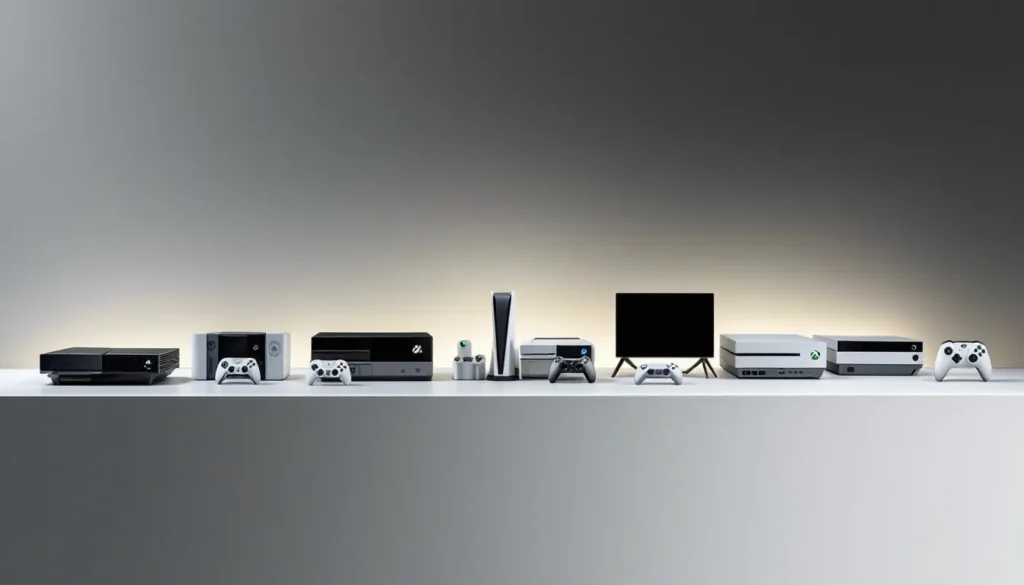
The evolution of gaming consoles is a wild ride that spans over five decades. From the humble beginnings of the Magnavox Odyssey in 1972 to today’s powerhouse machines, each generation of gaming consoles pushed boundaries and redefined what players thought was possible. Whether you’re curious about retro systems or want to understand how we got to the PlayStation 5 and Xbox Series X, this breakdown covers every major console generation, the hits, the misses, and everything that shaped modern gaming. Understanding this history isn’t just nostalgia: it explains why certain franchises dominate, how online multiplayer became standard, and why console wars still matter.
Key Takeaways
- All gaming consoles in order reveal that innovation and software quality have historically mattered more than raw processing power in determining market success.
- The Atari 2600 pioneered cartridge-based home gaming, while Nintendo’s NES rescued the industry from the 1983 crash by controlling game quality through strict licensing.
- Competition between all gaming consoles in order—from the Sega Genesis versus SNES to the PlayStation versus Xbox—drove continuous innovation and expanded gaming audiences.
- The Nintendo Switch revolutionized the industry by proving that portability and hybrid functionality could outperform competitors despite inferior hardware specifications.
- Modern ninth-generation consoles (PS5, Xbox Series X/S) now compete on ecosystem services like Game Pass and exclusive libraries rather than processing power alone.
- Future consoles will likely prioritize speed, AI integration, and cross-platform connectivity over raw computing specs as graphical realism approaches its limits.
The First Generation: The Birth of Home Gaming (1972-1980)
Magnavox Odyssey and Atari 2600
It all started with the Magnavox Odyssey in 1972. This wasn’t a cartridge-based system, it shipped with built-in games like Pong, and you plugged it directly into your TV. The Odyssey proved that home gaming could work, but it was the Atari 2600 (1977) that truly launched the industry. Released under the VCS (Video Computer System) name initially, the 2600 introduced the concept that would define consoles for decades: swappable cartridges.
The 2600 was a technical marvel for its time, with a MOS Technology 6502 processor running at 1.19 MHz and a mere 128 bytes of RAM. Titles like Pong, Space Invaders (1980), and Asteroids drove console sales through the roof. By 1980, the Atari 2600 had already sold over 2 million units and established cartridge-based gaming as the future. This generation proved home consoles could replicate arcade experiences, which was revolutionary. The first-gen era didn’t last long, technological leaps came fast, but it set the foundation for everything that followed.
Second Generation: The Arcade Boom Comes Home (1976-1984)
Intellivision and ColecoVision
As the Atari 2600 dominated, competition heated up. The Intellivision (1979) and ColecoVision (1982) promised better graphics and more complex games than what the 2600 could deliver. The Intellivision ran an Intel 1610 processor and marketed itself as “the most advanced home entertainment system available,” which was marketing-speak for being slightly more powerful.
The ColecoVision became the 2600’s biggest threat, boasting improved sprite handling and the ability to run arcade-quality conversions. Donkey Kong on ColecoVision looked virtually identical to the arcade version, which was a huge selling point. These consoles cost $199-$299 at launch, making them premium purchases, but they attracted serious gamers who wanted better performance.
But, this generation ran directly into the video game crash of 1983. Market oversaturation, poor-quality third-party games, and declining arcade interest caused consumer confidence to collapse. Atari’s famous E.T. the Extra-Terrestrial (1982), universally considered one of the worst games ever made, became symbolic of the industry’s decline. By 1984, Intellivision and ColecoVision’s sales plummeted, and the console market looked dead.
Third Generation: The Great Crash and Nintendo’s Revival (1983-1995)
Nintendo Entertainment System (NES)
Nintendo entered the market at exactly the right moment with the Famicom (Family Computer) in Japan (1983), followed by the Nintendo Entertainment System (NES) in North America (1985). Nintendo rebranded it deliberately, they called it a “home entertainment system” rather than a “video game console” to distance themselves from the crashed market. Smart marketing, but the real magic was in the software.
The NES had a Ricoh 2A03 processor (a modified MOS Technology 6502) with 2 KB of RAM. On paper, it wasn’t much more powerful than the Atari 2600. But Nintendo controlled quality ruthlessly through a lockout chip that prevented unlicensed games from running. This single decision restored consumer trust and attracted third-party developers who knew their games wouldn’t compete with shovelware.
Super Mario Bros. (1985) launched with the NES and became the system-seller. The NES library eventually hit over 700 games, with classics like The Legend of Zelda, Metroid, Duck Hunt, and Contra. The NES single-handedly revived the console market and established Nintendo as the industry leader. By 1990, the NES had shipped over 30 million units worldwide.
Sega Master System
Sega’s Master System (1985) was technically superior to the NES in some ways, it had better graphics capabilities and a more powerful processor. But it arrived late to the party and suffered from weak third-party support. Nintendo’s licensing deals locked down the biggest developers, leaving Sega with fewer AAA titles.
The Master System did score some wins with Phantasy Star and arcade ports, but it never captured the market the way Nintendo did. By the end of the third generation, the NES had roughly 80% of the console market. Sega’s Master System sold around 10 million units globally, respectable but dwarfed by Nintendo’s dominance. This generation proved that software, not hardware specs, drives console sales, a lesson that still applies today.
Fourth Generation: 16-Bit Wars Begin (1988-1998)
Sega Genesis and Super Nintendo Entertainment System (SNES)
The Sega Genesis (Mega Drive in Japan, 1988) and Super Nintendo Entertainment System (SNES, 1990) kicked off one of gaming’s fiercest rivalries. The Genesis shipped with the Motorola 68000 processor running at 7.67 MHz, while the SNES used a Ricoh 5A22 at 3.58 MHz. On raw specs, the Genesis looked better. It supported more colors (512 vs. 256 on the SNES) and had a higher clock speed.
But the SNES had better CPU architecture, superior sound chip, and Nintendo’s library of legendary franchises. Super Mario World launched with the SNES and became one of gaming’s most influential titles. The Genesis countered with Sonic the Hedgehog, creating a mascot war that defined the era. Both systems eventually accumulated legendary libraries, the SNES with The Legend of Zelda: A Link to the Past, Final Fantasy VI, and Chrono Trigger: the Genesis with Golden Axe, Altered Beast, and Gunstar Heroes.
Sega’s aggressive marketing and celebrity endorsements (Sonic’s attitude) appealed to older gamers, while Nintendo maintained broader family appeal. By the late ’90s, the SNES had outsold the Genesis roughly 2-to-1 (49 million to 29 million units), but both consoles were hugely successful. This generation proved that competition drives innovation, both companies pushed hardware and software to their limits.
Fifth Generation: The 3D Revolution (1994-2002)
Sony PlayStation and Sega Saturn
The Sega Saturn arrived in Japan in 1994, marking gaming’s shift to 3D. Its dual Hitachi SH-2 processors and quad rendering architecture looked impressive on paper but proved difficult to program for. The Saturn excelled at 2D but struggled with 3D due to its awkward architecture. Even though strong arcade ports and exclusives like Panzer Dragoon, the Saturn never achieved mainstream success outside Japan.
The Sony PlayStation (1994 in Japan, 1995 in the West) arrived with a completely different strategy. Instead of chasing raw horsepower, Sony focused on developer support and affordability. The PlayStation used a 33.9 MHz MIPS R3051 processor and 2 MB of RAM, making it easier to develop for than Saturn. Sony gave developers comprehensive toolkits and courtship, a stark contrast to Sega’s more hands-off approach.
Final Fantasy VII (1997) became the PlayStation’s killer app and legitimized JRPGs in the West. Combined with Metal Gear Solid, Resident Evil, and later Gran Turismo, the PlayStation became the must-have console. Sony’s aggressive third-party recruiting and licensing deals cemented their position. The original PlayStation shipped over 102 million units, making it the best-selling console of the fifth generation by a massive margin.
Nintendo 64
Nintendo went cartridge-based with the Nintendo 64 (1996), following a different path than the industry. This decision prioritized loading speed but limited storage, leaving games at a technical disadvantage compared to PlayStation’s CD-based architecture. The N64 shipped with 4 MB of RAM and a 93.75 MHz MIPS processor, respectable but not best-in-class.
What the N64 lacked in power, it made up for in innovation. Super Mario 64 revolutionized 3D platforming with its analog stick control and dynamic camera. The Legend of Zelda: Ocarina of Time became one of gaming’s most critically acclaimed titles. GoldenEye 007 proved FPS games could work on consoles, while Mario Kart 64 and Perfect Dark showed the system’s potential.
Even though a stellar library, the N64 sold just 32.93 million units, roughly one-third of the PlayStation’s total. Cartridges couldn’t match CDs in terms of storage or cost-effectiveness for third parties. This generation marked Nintendo’s transition from market leader to strong but secondary player, a position they’d occupy for over a decade.
Sixth Generation: Online Gaming Emerges (2000-2008)
PlayStation 2, Xbox, and GameCube
The PlayStation 2 (2000) dominated its generation with the Emotion Engine processor and DVD drive. The DVD inclusion was genius, DVDs were becoming the standard format, so the PS2 doubled as a media player. This alone drove adoption. The PS2’s 128-bit architecture and 32 MB of RAM made it significantly more powerful than fifth-gen consoles, opening new possibilities for developers.
Microsoft entered the market with the Xbox (2001), bringing DirectX optimization and Ethernet connectivity built-in. While the PS2 had stronger third-party support, the Xbox cultivated hardcore gaming with titles like Halo: Combat Evolved. Halo single-handedly established Xbox as the FPS platform and created one of gaming’s biggest franchises. The Xbox shipped with the Broadband Adapter for online play, though it remained optional.
The PS2 took online seriously with the Network Adapter (2002), eventually becoming the online platform of choice even though Xbox’s earlier start. Games like Final Fantasy XI and Metal Gear Solid 2 demonstrated online possibilities. Nintendo’s GameCube (2001) was technically powerful but suffered from a cartridge-like GameCube disc format and weaker third-party support. Even though iconic titles like The Legend of Zelda: The Wind Waker and Metroid Prime, GameCube was the generation’s sales underperformer.
By generation’s end: PS2 dominated with 155+ million units sold, Xbox shipped roughly 24 million units, and GameCube around 22 million. The PS2’s success was so overwhelming that it transcended gaming, it became a household name and the most commercially successful console ever made at that point.
Seventh Generation: The HD Era Begins (2005-2017)
Xbox 360 and PlayStation 3
The Xbox 360 launched in 2005, a year before the PlayStation 3, giving Microsoft significant first-mover advantage in the HD era. The 360 ran a tri-core PowerPC Xenon processor at 3.2 GHz with 512 MB of RAM. It was powerful, online-focused, and launched with Gears of War, a franchise-defining third-person shooter that pushed graphical boundaries.
Microsoft’s Xbox Live became the gold standard for console online gaming. Achievements, friend lists, party chat, and matchmaking felt seamless, it was the benchmark for online infrastructure. Franchises like Halo, Forza, and Mass Effect built the 360’s identity as the hardcore gamer’s machine. By mid-generation, the 360 had built unstoppable momentum.
The PlayStation 3 (2006) shipped with a radically different architecture: the Cell processor, a collaborative effort with IBM and Toshiba. The Cell had one PowerPC core and seven Synergistic Processing Elements (SPEs), making it notoriously difficult to program for. Early PS3 games showed performance gaps compared to 360 versions. But, by 2008-2009, as developers mastered the Cell, PS3 games began matching or exceeding 360 quality.
The PS3’s Blu-ray drive gave it a technological advantage over the 360’s DVD drive, though this mattered less as digital distribution grew. Exclusive franchises like Uncharted, Killzone, and The Last of Us eventually gave PS3 a compelling library. DualShockers covered the console generation extensively, documenting these shifts in real-time.
Both consoles succeeded massively: Xbox 360 sold approximately 84 million units, while PS3 shipped around 87 million. This was one of gaming’s most competitive generations, pushing both companies to innovate constantly.
Nintendo Wii and Wii U
While Microsoft and Sony fought on specs, Nintendo took a completely different approach with the Wii (2006). Instead of competing on raw power, Nintendo focused on motion controls and accessibility. The Wii shipped with motion-sensing remotes and was dramatically less powerful than its competitors (Broadway PowerPC at 729 MHz, 88 MB of RAM).
But the Wii was a cultural phenomenon. Wii Sports came bundled with the system and converted non-gamers into players. Grandmothers played bowling, families gathered for Wii Sports nights, and the console became a household staple. The Wii sold over 101 million units, more than both the 360 and PS3 combined. It proved that innovation beats raw specs when it comes to broad market appeal.
The Wii U (2012) tried to build on that success with an innovative GamePad featuring a built-in screen. But the concept confused consumers, third-party support evaporated, and the architecture was underpowered compared to PS4 and Xbox One. The Wii U sold only 13.5 million units, marking Nintendo’s lowest point since the N64. But, the Wii U’s game library contained hidden gems like The Legend of Zelda: Breath of the Wild, developed concurrently with the Switch, that would define Nintendo’s future.
Eighth Generation: Motion Controls and Digital Distribution (2012-2020)
PlayStation 4 and Xbox One
The PlayStation 4 (2013) and Xbox One (2013) returned to spec-based competition, but the landscape had shifted. Both systems used custom AMD APUs with eight cores and similar architectures, leveling the hardware playing field. The PS4’s GPU (1.84 TFLOPS) slightly outclassed the Xbox One’s (1.31 TFLOPS), giving multiplatform developers easier optimization on PlayStation.
Microsoft’s Xbox One launched bundled with Kinect, promoting it as a home entertainment hub. This turned out to be a mistake, gamers wanted a gaming console, not a living room device. The Kinect requirement pushed the price to $499 vs. PS4’s $399, and early game lineups favored PS4 with exclusives like Infamous: Second Son and Killzone: Shadow Fall.
Sony’s messaging was clear and focused: “This is a console for games.” The strategy worked. PS4 built momentum fast, acquiring exclusive franchises and securing better multiplatform versions. By 2020, PS4 had shipped over 114 million units, nearly triple the Xbox One’s 48+ million. Games like The Witcher 3, Bloodborne, Elden Ring, and Spider-Man became synonymous with the platform.
Digital distribution became mainstream during this generation. The PS Store and Xbox Store transformed how games were distributed, though physical console game releases remained important initially. By the generation’s end, digital would dominate.
Nintendo Switch
The Nintendo Switch (2017) revolutionized console gaming by being simultaneously a home console and portable device. Its hybrid architecture, docking into a TV while remaining fully playable as a handheld, was genuinely innovative. The Switch used a NVIDIA Tegra custom processor with 4 CPU cores and a Maxwell GPU, capable of 1080p docked and 720p handheld.
The Legend of Zelda: Breath of the Wild launched alongside the Switch and became one of gaming’s most influential titles, fundamentally changing how open-world games were designed. Within three years, the Switch had become the fastest-selling console ever, accumulating over 55 million units before the generation’s end. By 2023, it had surpassed 139 million units sold, making it the second best-selling console of all time.
The Switch’s success proved that innovation and portability matter more than raw power in certain markets. The system’s library became eclectic and deep, from Nintendo’s first-party franchises to indie games to ports of last-gen AAA titles. Discussions about console relevance continue as gaming platforms diversify, but the Switch’s success demonstrated that physical consoles remain culturally significant.
Ninth Generation: 4K Gaming and Next-Gen Performance (2020-Present)
PlayStation 5 and Xbox Series X
|
S
The PlayStation 5 (2020) and Xbox Series X (2020) brought gaming into the 4K/120fps era. The PS5 packs a custom AMD Ryzen 5 (8 cores) and RDNA 2 GPU capable of 10.28 TFLOPS, pushing 4K 60fps as standard. The Xbox Series X offers nearly identical specs at 12 TFLOPS, theoretically more powerful but practically similar in performance.
Microsoft also launched the Xbox Series S at $299, a cheaper all-digital alternative with 4 TFLOPS. This two-tiered approach gave consumers options, the Series X competed with PS5 at $499, while the Series S captured budget-conscious gamers.
What distinguishes this generation is software strategy. Microsoft pivoted aggressively toward Game Pass, a subscription service offering 200+ titles on day-one. This model prioritizes subscription revenue over individual game sales, fundamentally shifting economics. Games like Starfield, Halo Infinite, and Forza Motorsport launch day-one on Game Pass, making the service compelling even if full-price games cost less elsewhere.
Sony countered with PlayStation Plus Extra/Premium, offering a smaller but curated library. Load times via custom SSD architecture became a selling point, PS5 can load games in seconds vs. the minutes PS4 required. Real-world performance between the systems is remarkably similar, with each excelling at different games depending on optimization.
By early 2026, the PS5 and Xbox Series X
|
S have shipped tens of millions of units combined, though exact numbers remain proprietary. The generation’s real story isn’t power, both systems deliver gorgeous 4K 60/120fps experiences, but rather ecosystem choices and subscription viability.
Emerging Platforms and Alternative Consoles
Beyond traditional consoles, new players are reshaping the market. Steam Deck launched in 2022, bringing full PC gaming portability through a Linux-based handheld. It’s not a traditional console but competes directly with Nintendo Switch by offering access to 40,000+ PC games in portable form.
Nintendo Switch 2 speculation dominates 2024-2025 discourse, with expectations for improved specs and continued hybrid functionality. The original Switch’s dominance suggests Nintendo’s next console will again prioritize innovation over raw power.
Cloud gaming services like Xbox Cloud Gaming and PlayStation’s streaming options suggest a future where physical hardware matters less. But, latency and bandwidth limitations have kept cloud gaming niche. For now, dedicated hardware remains king, but the trajectory toward streamed gaming continues.
Handheld Consoles: A Parallel Evolution
Nintendo’s Dominance: Game Boy to Switch
Handheld gaming evolved on a parallel track to home consoles. Nintendo’s Game Boy (1989) was technically inferior to competitors like the Atari Lynx and Sega Game Gear, but it prioritized battery life, durability, and library depth. The Game Boy dominated the ’90s with 118+ million units sold, making it one of gaming’s most successful devices ever.
Nintendo’s handheld dominance continued through Game Boy Color (1998), Game Boy Advance (2001), Nintendo DS (2004), and Nintendo 3DS (2011). Each iteration refined the formula. The DS introduced dual screens and touchscreen gameplay, shipping 154+ million units. The 3DS added glasses-free 3D, selling 75+ million units.
Nintendo’s first-party franchises, Pokémon, Mario, Zelda, Metroid, drove handheld adoption consistently. Each generation sold on software moreso than hardware specs. When the Nintendo Switch arrived in 2017, it unified Nintendo’s home and handheld strategies, eliminating the need for two separate devices.
Competing Handhelds: Sega Game Gear, PlayStation Vita, and Beyond
Competitors tried challenging Nintendo’s handheld dominance but consistently fell short. The Sega Game Gear (1990) was technically superior with a backlit color screen vs. Game Boy’s monochrome display. But Game Gear required six AA batteries and lasted only 3-5 hours of gameplay. The Game Boy could run 30+ hours on four AAs. Market demands shifted: convenience mattered more than specs.
The Sony PSP (2004) mounted a serious challenge with impressive graphics rivaling PS2 and attractive titles like God of War and Monster Hunter. The PSP sold 80+ million units globally, respectable but still trailing the DS’s 154+ million. The successor PlayStation Vita (2011) attempted to match the 3DS with twin analog sticks and touchscreen. Even though a compelling library, the Vita struggled against the 3DS’s Pokémon advantage and Nintendo’s brand loyalty. The Vita sold around 16 million units, a significant disappointment.
Newer challengers like the Steam Deck represent a different philosophy: bringing full desktop gaming to portability rather than designing from-ground-up handheld experiences. Whether this model displaces Nintendo’s dominance remains to be seen, but the Switch’s 139+ million sales suggest Nintendo has cracked handheld gaming’s code better than anyone.
The Future of Gaming Consoles: What’s Next?
The console market entering 2026 looks vastly different than five years prior. Subscription services are reshaping economics, Game Pass essentially changed how games generate revenue. Cloud gaming remains perpetually “five years away” from mainstream adoption, hampered by latency and bandwidth limitations that plague even 2026’s infrastructure.
Hardware specs are plateauing. Moving from PS4 to PS5 offered dramatic generational leaps. Moving from PS5 to hypothetical PS6 likely won’t feel as revolutionary, we’re approaching graphical realism’s asymptote. Future consoles may focus on speed (load times, frame rates), AI-driven features, and ecosystem integration rather than raw compute power.
Nintendo’s next console will almost certainly maintain hybrid functionality. The Switch proved portability+home docking satisfies both use cases simultaneously. Whether it uses custom silicon or off-the-shelf components will define its specs and price point.
Third-party alternatives continue fragmenting the market. Tom’s Guide and other outlets continually review console comparisons as the category becomes more nuanced. Gaming PCs with better specs at lower prices threaten traditional consoles. Mobile gaming’s explosion captured billions of casual players. Console gaming increasingly occupies a narrower, but passionate, enthusiast niche.
The real question isn’t whether consoles survive: they’re too culturally entrenched. It’s what role they play as gaming becomes more platform-agnostic. Cross-platform play is increasingly standard, cloud saves sync across devices, and many franchises are day-one on PC, console, and mobile simultaneously. Consoles will likely remain important, but their exclusivity and differentiation will continue eroding. The next generation of consoles may be defined less by “what’s new” and more by “what’s convenient for my ecosystem.”
Conclusion
Tracing every gaming console from the Magnavox Odyssey through the PS5 and Xbox Series X reveals a consistent pattern: innovation trumps specs, software drives hardware sales, and the platform that best understands its audience wins market share. Nintendo proved this repeatedly by sacrificing power for innovation. Microsoft validated it with Xbox Live’s social infrastructure. Sony demonstrated it through exclusive game libraries.
Each generation brought technological leaps, from 8-bit to 16-bit to 3D to HD to 4K. But the systems that survived were those offering unique value propositions. The Wii sold more than the PS3 and 360 combined because motion controls created new gameplay possibilities. The Switch outsold competitors by being both console and portable. The PS4 dominated because it was simply better for multiplayer gaming with friends.
Today’s console landscape is healthier and more diverse than ever. Handheld gaming coexists with home consoles. Subscription services challenge traditional purchasing models. Cloud gaming lurks on the horizon, perpetually promising the future. Through it all, consoles remain central to gaming culture because they represent tangible hardware, immediate-access libraries, and shared multiplayer experiences in an increasingly digital world.
Whether the next console generation arrives in 2027 or beyond, one thing’s certain: it’ll tell us something new about what players actually want, not what manufacturers think they should have.
More Stories
SweetDiscord.com Consoles: How To Find, Use, And Troubleshoot Console Pages (2026 Guide)
SweetDiscord.com Consoles: The Friendly Guide To Buying, Setting Up, And Securing Your Next Console (2026)
Reef Quest Esports Console Review 2026: Is It Worth Buying?